Last updated: 12 November 2026
Choosing shop front glass for a cafe is different from choosing it for a clothing store. Your front has to show off the counter and the seating, take a door that swings all day, keep the cold air in and lock up safely after closing.
Get it wrong and the problems show up quickly: a door that swings into the queue, tables nobody wants in the afternoon sun, or a signage band that does not line up with the ceiling inside.
Hypro Renovation installs aluminium shopfronts, glass partitions and ceilings for F&B outlets across KL and Selangor, including ZUS Coffee outlets. This guide covers framed versus frameless glass, doors, heat, mall rules and installed rates, with photos from those projects. For non-F&B shoplots, our guide on shop front glass for PJ retail shoplots is the better read.
The video below shows how a commercial storefront glass door is put together, the same type of door most cafes use at the entrance.
Watch: how a commercial storefront glass door is assembled
A door hardware specialist assembles a commercial aluminium storefront glass door step by step. It shows why the door, frame and hardware need to be specified together, which is the main point of the F&B door section below.
1What Does a Cafe Need From Its Glass Frontage?
Quick Answer: A cafe front has to show the counter and seating from outside, take a busy door all day, hold the air-con in and lock up safely at night. It also carries the signage band. Most F&B owners get the best balance from an aluminium-framed front with tempered glass.
A retail shop front mainly displays stock. A cafe front does more. It sells the atmosphere inside, handles a steady flow of customers and delivery riders, and sits between a cold dining room and a hot pavement. Before you pick a system, list what the front must do for your outlet:
- Visibility. Can people on the walkway see the counter, the menu boards and busy tables?
- Door traffic. How many people and riders pass through at peak hour, and does the door need to stay open?
- Cooling. Which way does the front face, and how much afternoon sun hits it?
- Signage. Where does the logo go, and does it need a solid band above the glass?
- Security. How will the front lock after closing, and is there a shutter?
If you want the general background on glass types and safety first, our shop front glass guide covers the basics. This article stays with the F&B decisions.
2Should a Cafe Choose Framed or Frameless Shop Front Glass?
Quick Answer: Choose an aluminium-framed front for most cafes. It costs RM40–RM55 per sq ft installed with tempered glass, takes signage and door hardware easily and frames the glass for security. Frameless 12mm tempered glass, at RM55–RM75, suits outlets that want an uninterrupted view of a designed interior.
These are the installed rates from our aluminium shopfront service page. Doors are priced separately.
| System | Installed price (per sq ft) | Suits a cafe that |
|---|---|---|
| Aluminium frame + 5mm clear glass | RM 35 – 45 | Needs a budget front on a small street lot |
| Aluminium frame + 6–10mm tempered glass | RM 40 – 55 | Wants a safe, practical front with easy signage |
| Frameless 12mm tempered glass | RM 55 – 75 | Sells on a view of a designed interior |
| Interior aluminium partition (glass panel) | RM 30 – 45 | Needs a glass room or screen inside |
| Tempered glass swing door on floor spring | RM 1,800 – 3,500 per door | Has a single main entrance |
Source: Hypro Renovation aluminium shopfront glass service page, based on project quotations in KL and Selangor, 2024–2026. Final price depends on opening size, glass thickness, door hardware and site access.
For most cafes the middle row is the sweet spot. Tempered glass is safer if it breaks, and the aluminium frame gives the door closer, lock and signage something solid to fix to. The full price list and system details are on our aluminium shopfront glass page.
Frameless glass looks striking, but think about what customers will actually see through it. If the view is a long counter and a menu wall, framing barely gets in the way. If the view is a planted courtyard or a feature wall, frameless earns its higher rate.
Opening a new cafe or kiosk?
Send us the unit size and photos of the frontage. We will suggest a system and quote the glass, frame and doors line by line. Get a shopfront quote →
3Which Door Suits a Busy F&B Entrance?
Quick Answer: A tempered glass swing door on a floor spring suits most cafes because it closes itself, keeps the cold air in and handles heavy use. Sliding doors suit narrow fronts with little swing space. Folding stack doors suit outlets that open fully onto alfresco seating.
The door is the hardest-working part of an F&B front. Choose it for your peak hour, not for a quiet afternoon.
| Door type | Best for | Check before ordering |
|---|---|---|
| Swing door on floor spring | Most cafes with one main entrance | Swing direction, hold-open setting, lock type |
| Double swing doors | Wide fronts and busy takeaway counters | Clear width for trolleys and deliveries |
| Sliding door | Narrow fronts with tables near the entrance | Track cleaning and how it locks at night |
| Folding stack door | Outlets that open fully onto alfresco seating | Where the panels stack when open |
Hypro Renovation guidance from F&B and retail shop front projects in KL and Selangor, 2026. Indicative only; every frontage differs.
Think about who comes through the door besides diners. Delivery riders and stock deliveries often use the same entrance as customers, so the clear opening and the swing direction matter. A door that swings into a queue causes trouble every lunch hour.
4How Do Heat, Glare and Air-Con Affect the Glass?
Quick Answer: A west-facing cafe front takes strong afternoon sun, which heats the seating near the glass and works the air-con harder. Decide on glass type and any tint before the panels go for tempering, because tempered glass cannot be changed afterwards without a new order.
Malaysian afternoons are hard on glass fronts. Seats next to west-facing glass can be uncomfortable from mid-afternoon, which is often a cafe’s second peak. You have a few levers:
- Glass choice. Ask about tinted or laminated glass options at quote stage, before tempering.
- Solid zones. A solid signage band above the door and side panels reduces how much glass faces the sun.
- Door habits. A self-closing floor spring door keeps cold air in better than a door propped open.
- Seating plan. Put takeaway queues, not long-stay tables, in the hottest strip by the glass.
Laminated glass also holds together when broken, which helps after hours. Our article on shop front glass design and security compares glass builds for break-in resistance in more detail.
5What Do Malls and Street Shoplots Expect From a Shopfront?
Quick Answer: Malls usually want drawings approved, a hoarding board while work runs, and hacking or glass delivery after closing. Street shoplots have fewer building rules, but changes to the frontage may need the landlord’s consent and, in some cases, local council approval. A single shop lot front takes 2 to 4 days on site once the glass is ready.
The rules depend on where your outlet sits. Mall fit-out manuals are strict and specific. Street shoplots are more relaxed, but if you are changing the frontage itself, check with the landlord and your local authority, such as DBKL in Kuala Lumpur.
| Project type | Typical on-site duration | Notes |
|---|---|---|
| Single shop lot front + door | 2–4 days | Add 5–7 working days for glass tempering |
| Mall unit shopfront | 3–6 days | Often night works to fit mall rules |
| Front + interior aluminium partition | 3–6 days | Front and partitions run as one schedule |
| Multi-bay frontage | 5–10 days | Phased bay by bay so trading can continue |
Source: Hypro Renovation aluminium shopfront glass service page, based on project records in KL and Selangor, 2024–2026.
Follow these steps to keep the shopfront from holding up your opening date:
- Get the landlord’s fit-out rules. Ask for the mall or building fit-out manual, approved working hours and any hoarding requirement.
- Measure the opening on site. Check floor and beam levels, door swing and the signage position before anything is ordered.
- Lock the glass and door spec. Confirm frame colour, glass thickness, tint and door hardware before panels go for tempering.
- Book the installation slot. Allow 5 to 7 working days for tempering, then book day or night works to suit the building.
- Inspect at handover. Check door swing, locks, closers and sealant against the quotation before signing off.
Mall units often pair the shopfront with a feature ceiling inside. Our sibling guide asks whether a gypsum ceiling is right for a mall retail store, which covers the ceiling side of the same fit-out.
6Project Spotlight on Two ZUS Coffee Outlets in Selangor
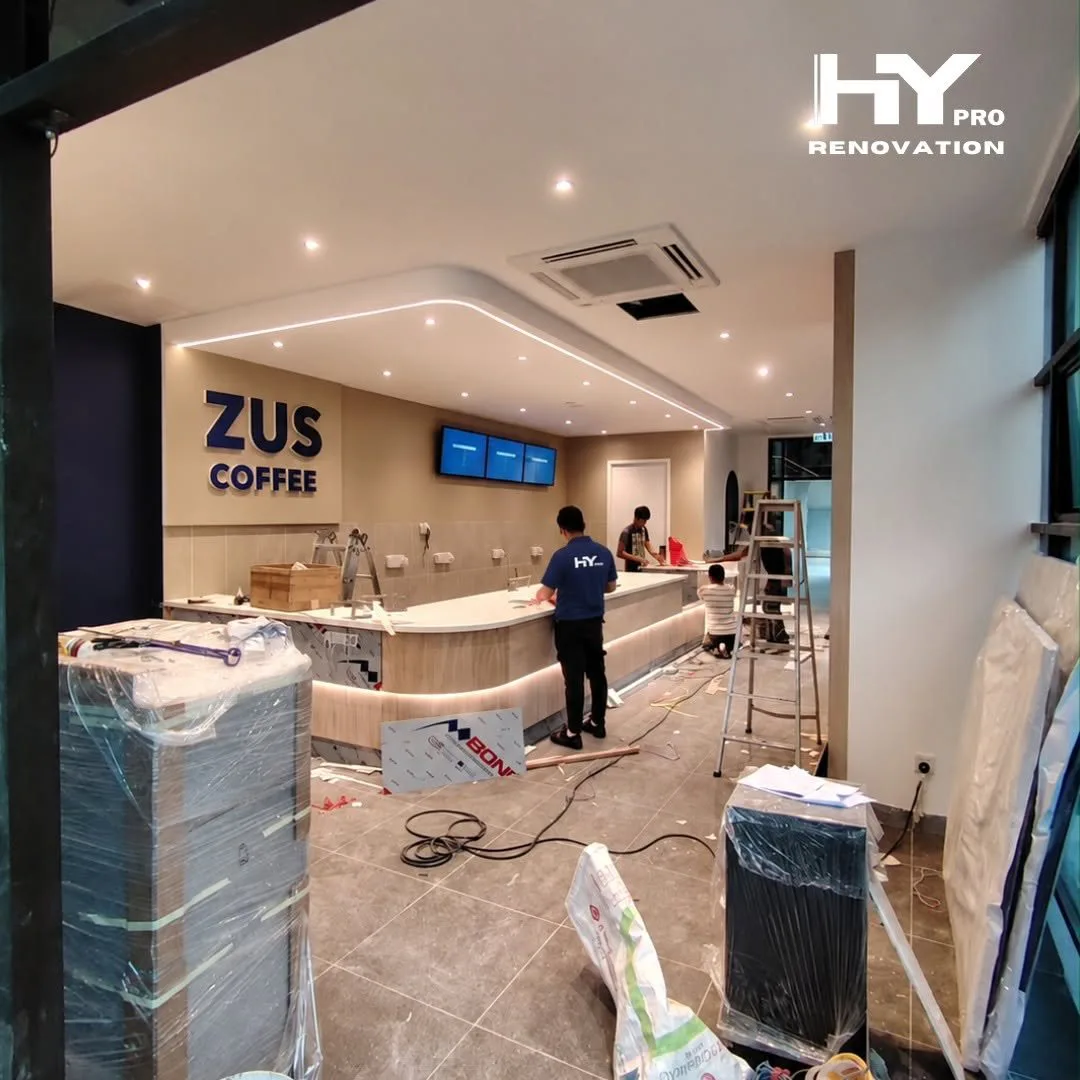
Quick Answer: Hypro has worked on ZUS Coffee outlets in Selangor, including one in Puncak Alam. Our scope covered the aluminium shopfront, a plaster ceiling with a custom curved bulkhead over the counter, partitions and glass and aluminium works. One team handled the front and the ceiling, so the lines meet cleanly.
ZUS Coffee, Puncak Alam
At the Puncak Alam outlet, Hypro’s scope included the aluminium shopfront, a plaster ceiling with a custom curved ceiling design, partitions, and glass and aluminium works. The feature is a curved bulkhead with a cove line running over the counter, which you can see from the entrance.
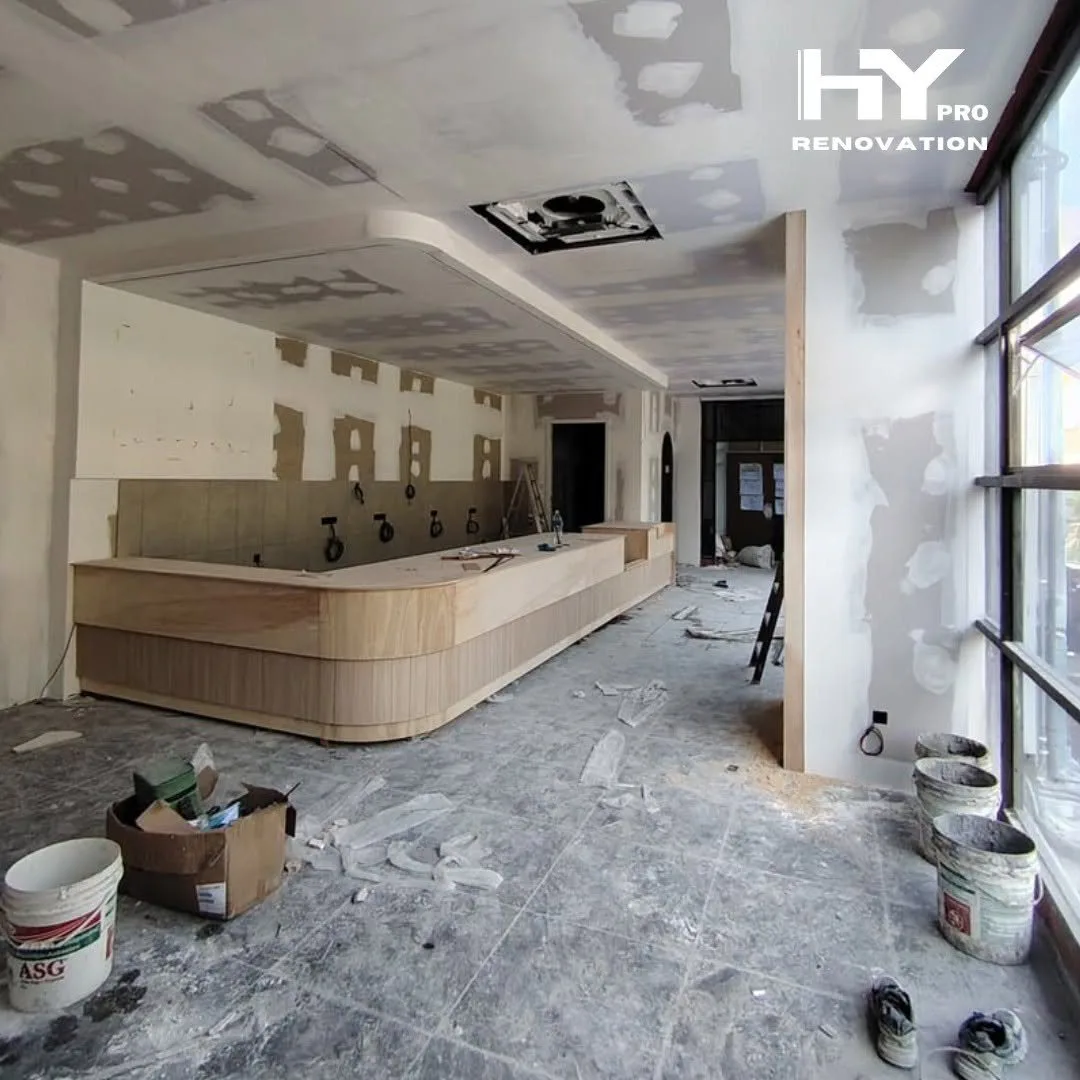
Having the shopfront and the ceiling with the same team matters in a cafe this size. The ceiling line, the top of the glass and the signage band all meet at the front. When they are set out together, nothing needs adjusting on site.
A ZUS Coffee outlet in Selangor
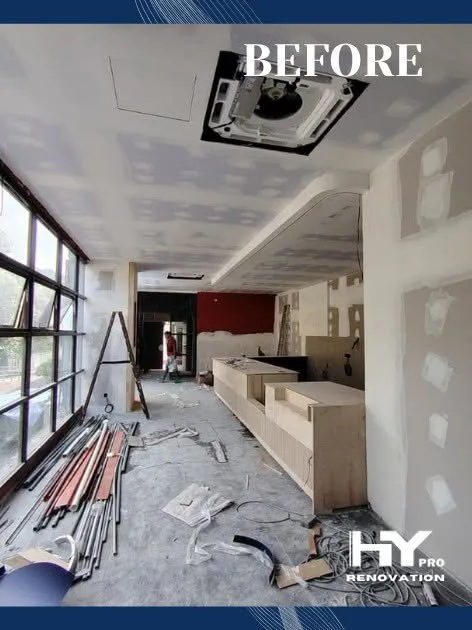
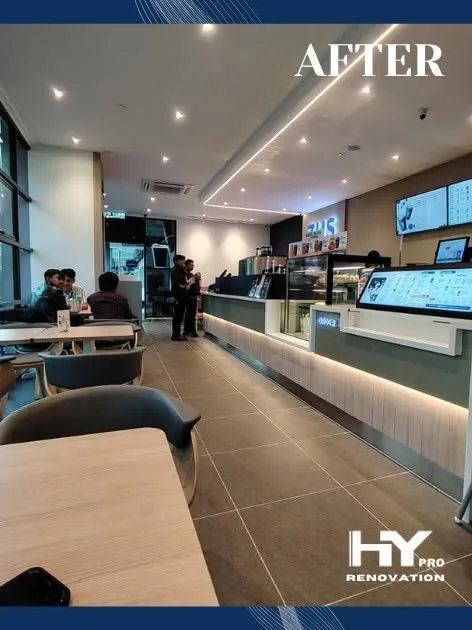
For another ZUS Coffee outlet in Selangor, Hypro delivered an aluminium shopfront and a curved plaster ceiling design. The before photo shows the gypsum boards jointed, the cassette air-con opening cut and the bulkhead framed. The after photo shows the finished ceiling with its linear light line and downlights, and the cafe open and trading.
If your cafe is also planning a feature ceiling, our sibling guide on how to plan a plaster ceiling for a Selangor cafe walks through the ceiling side.
Want a front and ceiling handled together?
We quote the shopfront, ceiling and partitions on one itemised quotation with one schedule. Talk to our F&B fit-out team →
7Should the Glass Inside Match the Shop Front?
Quick Answer: It helps. Using the same frame colour and glass type inside gives the outlet one clean look from the walkway to the back. Interior aluminium glass partitions cost about RM30–RM45 per sq ft installed and suit private dining rooms, offices and screened areas.
Many F&B outlets need glass inside as well: a private dining room, a small manager’s office or a screen between seating zones. When the interior glass matches the front, the whole unit reads as one design.
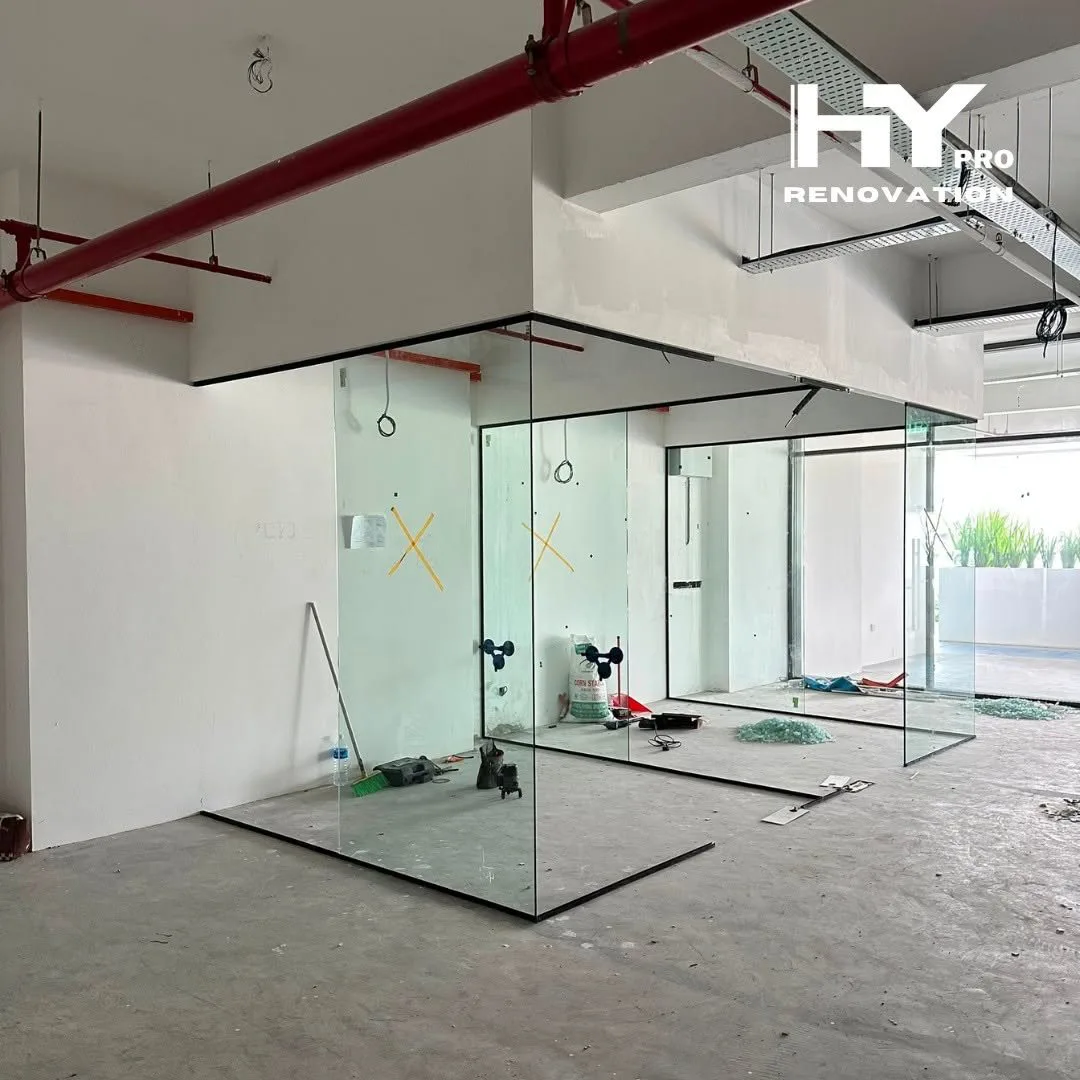
At a commercial shoplot in Kepong, Hypro installed a bulkhead partition, drywall partition and tempered glass partition. The same bulkhead-over-glass detail works well in F&B units that need a glass room without losing ceiling height. Our glass partition team plans interior glass alongside the shopfront.
8Conclusion
The glass front of a cafe or F&B outlet has more jobs than a normal retail front. It sells the room inside, takes a busy door, faces the afternoon sun and locks up every night.
For most outlets, an aluminium-framed front with tempered glass and a floor spring swing door is the practical choice. Go frameless only when the view inside is your selling point. Settle glass type, tint and door hardware before tempering, check the landlord’s rules early, and plan the front with the ceiling so the lines meet.
9Frequently Asked Questions
1. How much does shop front glass cost for a cafe in KL or Selangor?
An aluminium-framed front with 6 to 10mm tempered glass costs about RM40 to RM55 per square foot installed. A budget frame with 5mm clear glass is RM35 to RM45, and frameless 12mm tempered glass is RM55 to RM75. A tempered glass swing door on a floor spring is priced separately, typically RM1,800 to RM3,500.
2. Is a framed or frameless shopfront better for an F&B outlet?
Framed glass suits most cafes because it costs less, takes signage and door hardware easily and adds security framing. Frameless tempered glass suits outlets where the view of a designed interior is the main selling point.
3. What door is best for a busy cafe entrance?
A tempered glass swing door on a floor spring suits most cafes. It closes itself, keeps the air-con in and handles heavy use. Sliding doors suit narrow fronts, and folding stack doors suit outlets that open fully onto alfresco seating.
4. How long does it take to install a cafe shop front?
A single shop lot front and door usually takes 2 to 4 days on site. Allow another 5 to 7 working days before that for the glass to be tempered. Mall units often take 3 to 6 days because work runs at night under mall rules.
5. Do I need approval to change a shop front in a mall?
Yes. Most malls require approved drawings, a hoarding board during works and installation within approved hours, often after closing. Street shoplot tenants should check with the landlord and the local council before changing the frontage.
6. Can the shop front and ceiling be done by the same contractor?
Yes. Hypro handles aluminium shopfronts, ceilings and partitions on one schedule. At ZUS Coffee in Puncak Alam, our scope included the shopfront, a curved plaster ceiling, partitions and glass and aluminium works.
Planning the shopfront for your cafe or F&B outlet?
Hypro’s CIDB-certified crew has over 20 years of experience in aluminium shopfronts, glass partitions and ceilings for cafes, restaurants and retail outlets across KL and Selangor. We measure, quote line by line and install with our own team.